Three years ago, I ditched my front yard lawn for a meadow of native grasses, wildflowers, shrubs, and ground cover. What was a square of yellowing grass is now a thicket abundant with diverse plant and wildlife. When I look out my living room windows, I can no longer see into the house directly facing ours. Instead, I am met with a dozen or so goldfinches flitting from the long, swaying branches of the Twinberry honeysuckle to the dense clusters of yarrow tangled among lupines that have somehow grown taller than me.
With the help of my partner and a good friend of ours, we carried out this conversion across several painstaking days of digging, cutting, and swearing at over 1200 square feet of sod. I will never forget how bizarre the weather was that October— 85 degree days all week long! Unheard of! I waited weeks for it to cool down long enough to sow the meadow with minimal fear another random heat wave would wake the seeds up too early and seal their fate with an aggressive winter frost.
The waiting was worth it. The first year we got short, patchy bursts of pinks and oranges. The second year was more dense and green, but less color than the first. This year, we finally got to see the payoff of having a functional urban wildlife habitat. Watering less than any year before, somehow this season the meadow grew at a rate that was genuinely astounding. Birds I have never seen around our feeders before are becoming regulars. More butterflies and bees are visiting than I have seen in years! I have learned the names of so many new plants that I have to keep track of them in a list on my phone. Sleep, creep, leap. It’s real.
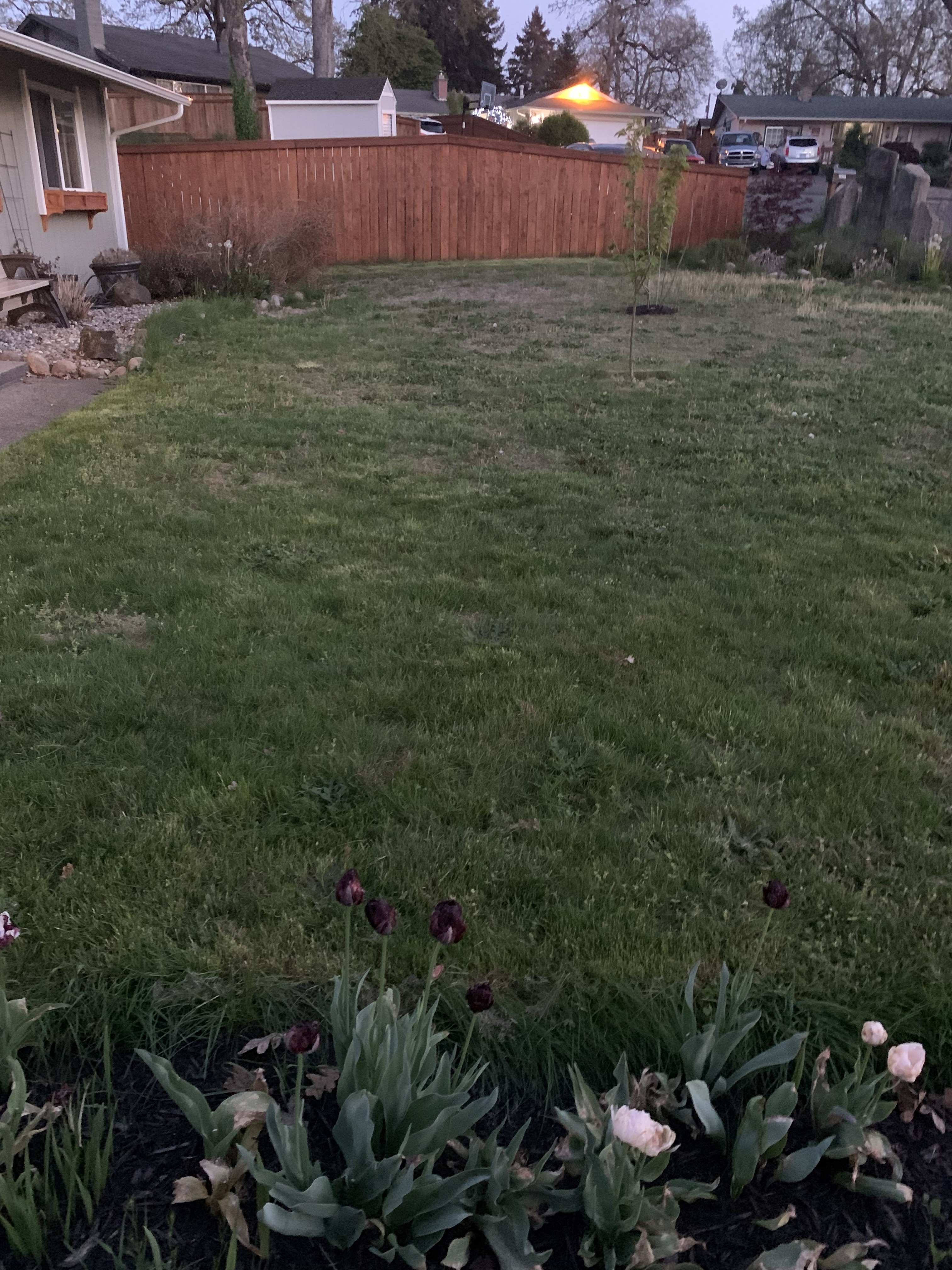
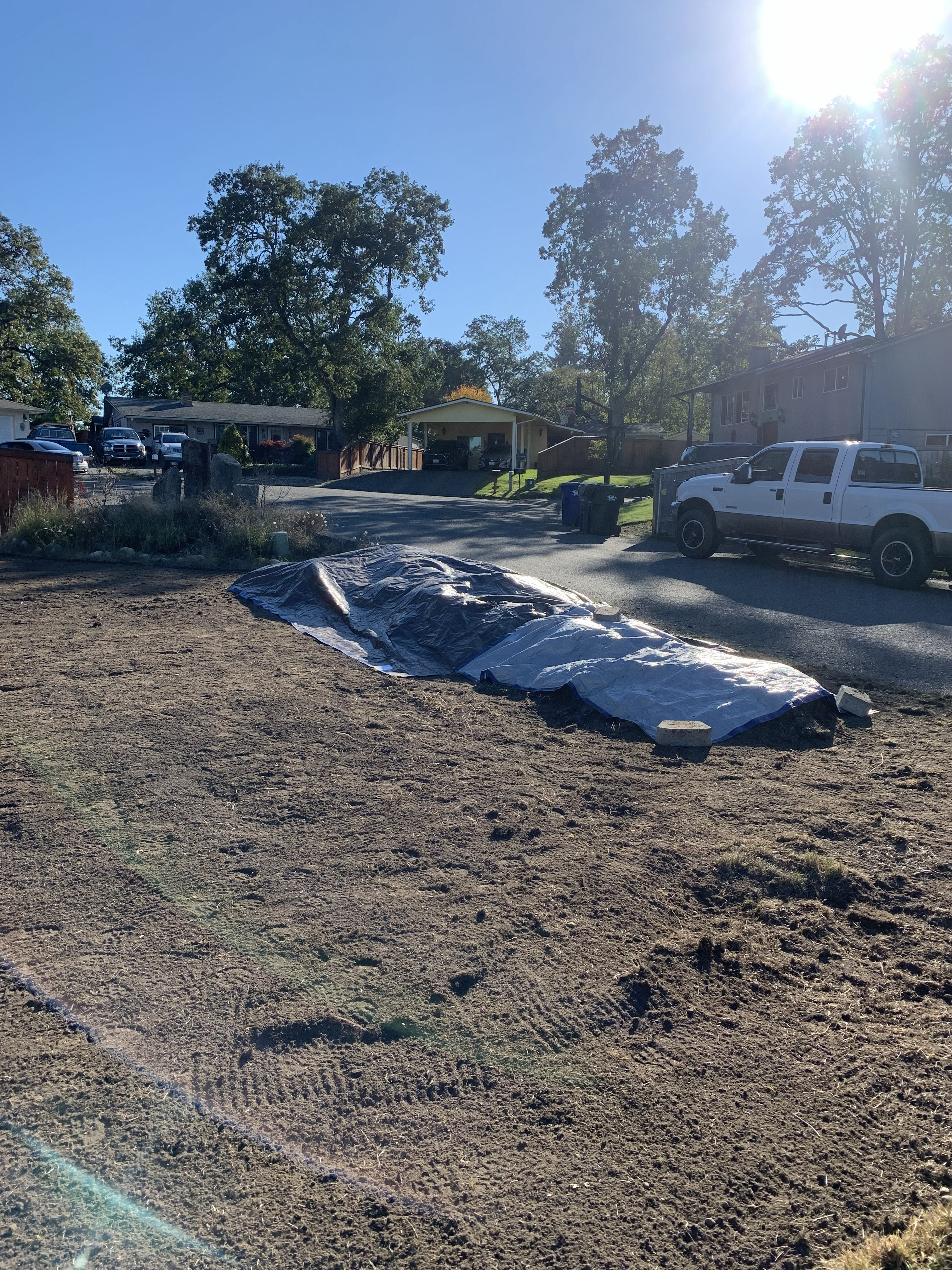


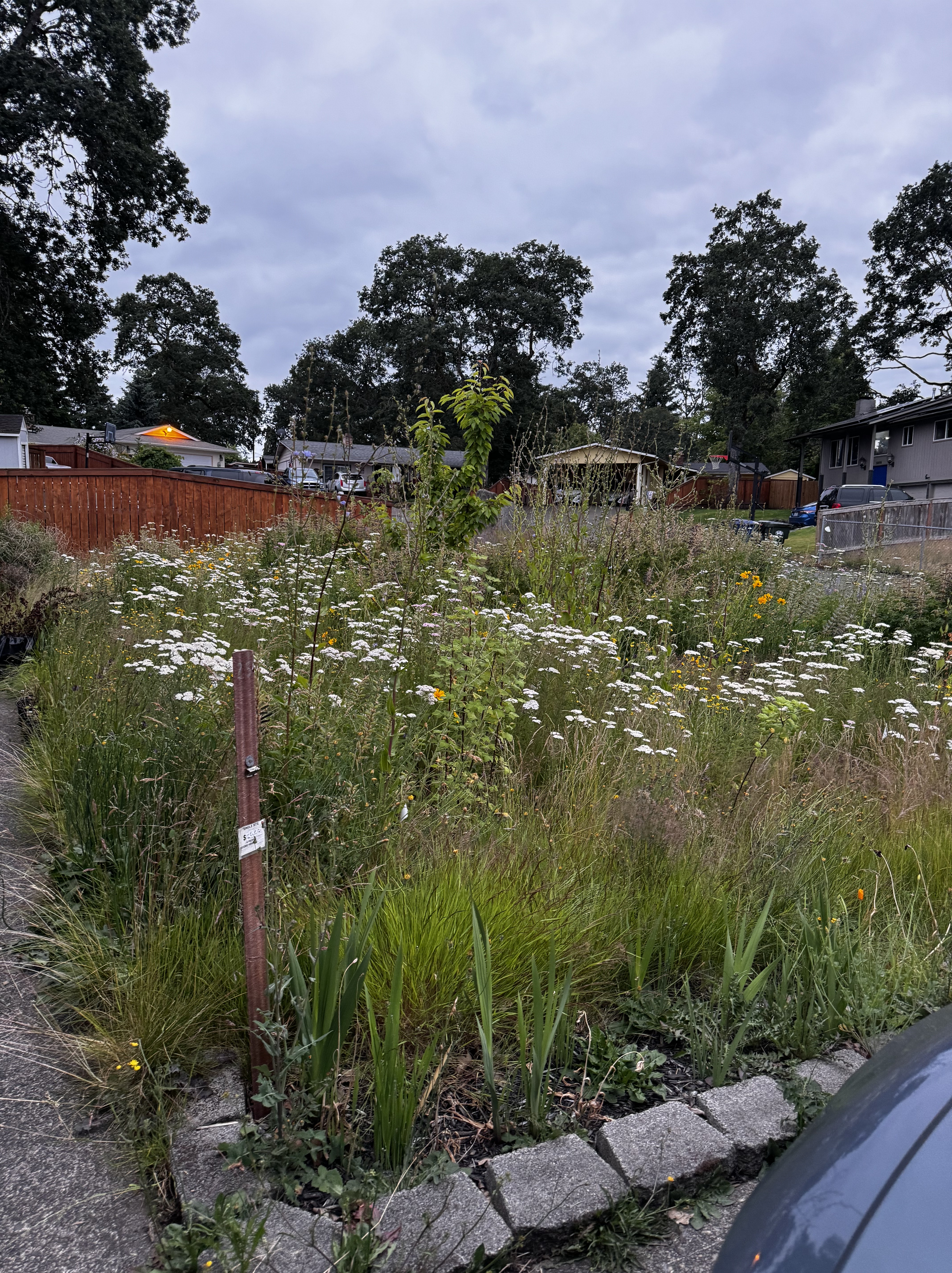

Now that we are a week into November, the bursts of color are long gone. Tall stalks of black and brown wilt into each other, looking more like the yard of an abandoned haunted house in a Hallmark movie than a vibrant wildlife habitat. Despite the appearance, I wait to do most of my maintenance until mid-to-late winter up so the plants can re-seed throughout the fall and become shelter for birds and other small animals during the winter.
My mom hates it.
“I know it’s for the birds, I know you love the animals, but why in your front yard? Why not do that in the back where no one can see it? Or cut it all down for winter and just bring back small beds of flowers and let the grass grow back around them?”
She’s not wrong— I know full well that the meadow doesn’t look the prettiest for most of the year. Especially now. In all honesty, I was not expecting it to pop off as well as it did this year. I was banking on having a little more time with the patchiness to add a few trellises, build in a little walkway, get some mulch down and shaping done. Year three did not give a fuck about my landscaping plans. Walking just fifteen feet deep into my front yard, I completely disappear from view.
Sleep. Creep. Leap. Time, as the western colonial world knows and experiences it, wonderfully has no bearing on the natural world. The hours and days and months we ascribe to how we experience the passage of time mean nothing to a seedling waiting for the right combination of warmth and moisture to germinate. Our star plant this year was the riverbank lupine— a perennial plant that needed those two years of sleepin’ and creepin’ to do its thing. Phases in a natural life cycle rely on tangibly experiencing seasonal or environmental indicators. Honestly, it’s pretty fucked that we, as animals, have been robbed and separated from this natural timing.
By tending to the meadow over the last few years, I’ve learned quite a bit about biological timing. Connecting the rhythms of resident plants, insects, and animals to each other, and to seasonal cycles, has led to some of the most interesting lessons in ecology for me, yet. I recently learned about phenological mismatches, which is a sciencey-way to describe when the timing of repeated events within these cycles are disrupted due to changes in seasonal or environmental indicators.
In my bioregion, for example, we’ve been experiencing earlier warmer temperatures pretty consistently over the last 50 years. As the temperature is warmer earlier in spring, flowers that rely on that warm weather indicator to bloom, will bloom earlier in spring. This may be too early in the season for their pollinators to be out and about, though, creating a mismatch in the interacting species’ rhythms and potentially impacting the viability of that flower getting pollinated. This is partially why habitat restoration efforts emphasize increasing species biodiversity. By introducing different varieties of flowers that draw different kinds of pollinators around our early bloomer, we may increase the chance that our flower gets pollinated, even if not by the species of pollinator it was originally interacting with. The natural cycles that were mismatched, become re-synchronized.
As creatures of the natural world ourselves, imagine the freedom of moving through your life in tune with the environment around you— blooming when the conditions were right, not when the “time” was. The western timing of the “new year” feels like a cruel joke. What better way to set someone up for failure than encouraging a “new you” in the dead middle of winter? It makes me wonder if we are conditioned to ignore any environmental changes, given how little we rely on them. Our version of time marches on, exactly the same, every year, no matter what.
I think about timing a lot…
Lately, things have felt like they are happening so fucking fast after not happening at all for so long. Does that ever happen to you? Things are just okay, just okay, just okay, just okay, and then bam! Suddenly you go from being a patch of dirt to a six foot tall lupine plant! Did you perceive time moving slower those first few years because you couldn’t see any growth happening above the soil? If it felt slower, does that mean it was a slower process? Or is it that time was moving normally at first until this recent experience of very visible growth?
Looking back through my journals, I see myself writing about embodiment, climate care, hope, and resilience for the last two years. I read passages reckoning with creativity, art-making, and embodiment vs “auto-pilot.” The need for community, in hindsight, was so clear but I didn’t have the language for it at the time. I didn’t have the time, at the time, to understand what it was that I was even untangling.
Was there a mismatch? Or is there a mismatch now?
In winter,
everything felt urgent. The world felt darker than ever and I didn’t know how to move through that darkness. Worse yet, I was convinced that I was navigating it alone. It didn’t feel like I could rely on friends or family to understand just how dark this season was. There was an unmet need and I just couldn’t figure out what. My body knew that I wasn’t well, but I wasn’t in my body long enough to actually get that memo in time. My writing reflected this desperation and then eventually stopped again. I knew that something was wrong, but “just knowing” isn’t enough to fix it.
Sometime in Ramadan, I cobbled together a group of folks who I thought could help me fix it. These were dear friends, artists, creatives, comrades, and organizers who I looked up to and hoped would come together, draw me a map, and finally lead me out of this darkness. I needed to write about hope— but what was I hoping for? I knew if anyone could give me a list of things to hope for, to say, to make art about, it would be one of these friends.
Over Iftar, I explained my situation. I shared with them a zine I had read, Making Art as an Anti Capitalist, and how much it resonated with me that to be an artist, it simply means making something to say something. I agreed that making art without having something to say is really just making decor. I waxed about how I just knew I had something to say, but I didn’t know what it was, and I needed help figuring it out. What was I doing wrong? There certainly was a mismatch, but not the one I had thought.
In a response I thought would be comforting and affirming, my friend James instead happily jumped in with, “well, of course you’re not going to make art if you don’t believe you have anything worth saying. If you don’t have anything to say, don’t make art. It’s that simple.”
Looking back, duh. But in the moment, I was gutted. What do you mean the answer is just don’t make art? I was asking for help figuring out what to say. I wanted feedback on if what I had to say was good and meaningful enough to make into art, not discouragement! Was I really not good enough to share with the world how all of the changes happening around me and in my life were impactful and necessary to see through art?
In later conversations with James, he did affirm that he was trying to tell me that I needed to be excited about, in love with, and fully convinced by what I had to say so that I could make meaningful art. He knew I had something important to share with the world and knew it would take work to get it out. James was showing me the first step out of that darkness was simply just acknowledging that it was dark.
In early spring,
I spent a lot of time reflecting on what James said. What did it mean to listen to myself? I went through workbooks of self-keeping and value-setting. There was so much to be angry about in the world that it was clear to me what I was against. I found it much more difficult to parse out what exactly it was I was for. What was I missing in my life that I sought? What am I kept from because the horrors of the world exist the way they do?
In that zine about art-making I mentioned, the author suggests you find what you are for by looking at what you are mourning. The author encourages the reader to ponder how they see their ancestors helping them in the struggle to remove indoctrinated capitalism, colonialism, and white supremacy from their world view– in other words, who are the elders that you are looking to for guidance? I found an unexpected place of mourning, here. This was around the same time I was reading a lot of Kimmerer and came across a section where she describes going to her elders when she is unsure of something. The oldest ancestors, the plants and wildlife, are the elders that have been here the longest and seen the most, so there is a wisdom to tuning in to the natural world for guidance.
This was incredibly profound to me. What have I learned from nature? Do I truly see nature as teachers? As elders? Who would I go to, then? As a child of immigrants growing up in a small family in America, detached from reciprocal community, detached from extended family, detached from a Masjid or any real spiritual support, I realized I did not know my ancestors. Colonialism has very specifically severed my ties to them. Severed my language from theirs. Coming into these realizations during Ramadan felt important to me and like there was something there that I was for. Something to tug on, so I did. I did some research into local Muslim affinity groups and connected to a queer-inclusive BIPOC Muslim space. I took my first true step into discomfort and felt the darkness lighten, just a little bit.
Later that month, around mid-Ramadan, I attended my first concert of the year. I broke my fast on a Redbull at the Showbox Market bar, standing around a fuck ton of old white guys waiting to see Pelican and Russian Circles. If you are unfamiliar with either of these bands, think instrumental, droning post-rock. The first time I encountered this genre was in middle school coming across “The Bees Made Honey in the Lion’s Skull” by Earth, a band who are coincidentally local to Washington State. It is the kind of music where waves of noise just crash over you, like nature melting into your bones in a way that you’ve never felt before. It felt like musical ecology. I don’t know.
Over the years, I made my way through the genre and Russian Circles made their way into my regular rotation. I find myself going back to them over and over again, especially when I am writing. I’ve seen them live before and was ecstatic to see them again after their release of new music, but on this occasion, the fatigue of a long day of fasting and a stomach empty except for a Redbull was smothering my ability to stay engaged. The last thing I wanted was to engage in a conversation with one of the older dudes standing next to me during intermission, asking me about my hijab. Before my usual eye-roll, he clarified by saying he just wanted to ask how my Ramadan was going and if I was Muslim, because he was fasting too.
I have been going to metal shows for over ten years and somehow this was the first time I met another Muslim in the crowd. I would never have even known had he not told me. I felt my mood soften. I joked about how concert-iftars were the worst. He chuckled but asked why I wouldn’t just break my fast on a date and then catch a meal later that night at the Masjid for Taraweeh prayer. It made me think back on the many times my sister and I broke fast on just a sip of water passed down to the mosh pit from the sweaty hands of folks on the barricade. Just the two of us, hoping an iHop would be open after the show to at least get some kind of real food in us before crashing and then fasting again tomorrow. I thought back to all the Ramadan-concerts where it was just me and a smuggled granola bar or a taco bell burrito to get through the show and soften my stomach before the Redbull waiting in the car for my drive home. I think about the quiet darkness of a late night, slipping into bed with eyeliner still smudgy and a tour shirt on for the few short hours of sleep before suhoor to begin my fast the next morning. Ramadan as an adult has always been like this for me.
I heard this man’s question and zoomed out. I didn’t have anyone else to go to and have a meal with. To pray Taraweeh with. I had never even considered that an option, who would I even go with? What mosque would take me? Would I just sit in silence there, too? The competing thought I had, though, was: how am I getting my face melted by a band I love next to a dude who looks like the poster child of history professors and the opportunity to lean into community in an unimaginable way somehow just…happened? Is this what has been missing? Was it that easy? The timing felt right, I felt excited and engaged to explore this missing piece– finding community. Before the older Muslim guy took off a little early, he wished me a good night and a safe drive back home. I wish I got his name. Maybe I did. I wish I remembered it.
Not an hour later, I was walking out to my car with ears still ringing from the show when I received a message on my phone. It was a long message from the queer BIPOC Muslim group I had started to connect with. Long story short, I was no longer welcome in the space as a white-passing Arab Muslim because I had referred to myself both as Arab and as White, which was a cause for concern because it was a closed BIPOC group specifically not for White folks. I don’t have any “White American” in me— both my parents are Arabs, but I’m light skinned. In referring to myself as White instead of White-Passing, I was being accused of intentionally manipulating my way into the space and non-consensually wasting BIPOC people’s time. It was communicated that my intentions were ambiguous, they didn’t know who I was or why I was there so I was accused of being unsafe. Not once was there a question about my intentions, it was all assumed.
It felt like cosmic irony. How was I ever going to build relationships in a space where I didn’t know the people, and they didn’t know me? In trying to respond to that message, I realized I was blocked. Removed from the chats. The emails. The group. All of it. So much for a missing puzzle piece. Like that flower, I thought I opened up on time, only to find myself alone. I sat in my car on 2nd ave in Seattle reading the message over and over again. All I remember from the drive home is how badly it felt like I had fucked up. How it felt like the darkness was closing in again, swallowing me mile by mile as I drove home in complete silence.
In summer,
the days got warmer quicker than I had expected. In moving through that darkness, the bright spots became easy to find and easier to follow. I learned that finding community meant more than adding yourself to an email list of people who you thought had similar life experiences to you, based on identity. Rather, it was going to be necessary to find community in shared values and intent. I had to diversify what was around me to see if something different could meet my needs. Turns out, something did. Because of that, I think I ended up alright.
The right resources turned up at the right time to nurture me, they just weren’t the resources I was expecting. All I had to do was introduce change, in the smallest of ways. Which sounds obvious– of course if you want a different outcome, you have to do things different. It feels less obvious when you keep trying the same things over and over again because you suspect you aren’t doing them correctly. You aren’t doing it right. If you just get better, or even the best, at doing the things, then you can finally rule them out and try something else. Just not until you give it your literal all, because anything short of that would be quitting. Giving up. Cheating. It felt less obvious to understand that resistance simply meant to take a different path when before it’s only meant I am not trying hard enough. Try something different– diversify. Complicate. [Sidenote, I have been told that using an em dash is an AI dogwhistle, because apparently AI writing uses it a lot? Sucks to fucking suck, because I have used them for as long as I have written even when they are grammatically incorrect because I write the way I read it in my head. As a poet, it reads like enjambment for prose for me. Same with commas, I love those guys. Professors hated me for it. It gives dimension and space to my writing and I love it. I will continue to use them, likely incorrectly, as I always have. I hate that I have to make this disclaimer, but just wanted to make it clear.]
When I finally knew what I needed, things moved fast. An environmental mismatch was keeping me from that movement, stuck in a forever loop of “what the fuck is wrong with me, why can’t I just do the thing?” It certainly helped that amidst the processing and understanding of my newly diversified, soul-filling environment, I got to take a loooooong break in the UK to collect my graduate degree diploma from the University of Sussex and spend my evenings with Scottish sheep. July was such a lovely month. It gave me the space and time I needed to sit with what this newness meant. It made figuring out the next steps of who I wanted to be so much clearer, without expending anywhere near as much effort as I had to before.
Settling into autumn,
An opportunity to continue diversifying my community organically came up. Actually, upon reflection, many opportunities that I had spent a long time looking for started to organically pop up. Even in little ways. The one that stands out the most was deciding to take a mental-health day off from work to go get coffee and do some writing. In the moment, the writing wasn’t feeling good and I was getting stuck. Usually, I would push through and try to get something out. I mean, I did take this day off work after all. It would be a shame if it went to waste. Instead of sitting there trying to force productivity, I unexpectedly decided to go on a walk.
In doing so, I ended up running into my seventh grade science teacher– someone who had single-handedly one of the largest impacts on me during my middle-to-high-school years. What joy was it to reconnect, catch up, and learn that he was actually teaching in environmental sustainability now, and there was potentially an opportunity to work with him and his students based on my career trajectory! How fucking cool! We ended up talking for like two hours and I left with such a hopeful outlook on everything. I got home and wrote and wrote and wrote.
I continued to experience settling into creativity through being present. It became clear that I had been trying to plant good seeds in bad soil, as my friend Ariel would say. The seeds that I tried planting last winter weren’t doing so hot in compacted, dry, dead soil. I spent a lot time in spring and summer amending the soil– aerating, weeding, and introducing nutrients & compost until there was a clear sign of life. Soil that was healthy and alive meant new plants would establish, new bugs would move in, new birds would notice the new bugs and soon enough a whole new ecosystem would flourish and work together to sustain life. Finally, there were people around me who were ready to be catalyzed, organize, and connect to all of the things I also felt I needed to.
I think it was at this point I realized that a satisfying creative life was only going to exist in these seasons and would only be as healthy as the metaphorical soil I was working with. I am a long term project, that will evolve and need different things over time. Long term projects require resilience and vision. Dreams. “Olive-tree dreams,” as Pastor Shalom said in the orientation lecture she gave to the climate leadership cohort I participated in. The care of a sapling will look different in its first winter than its fourth. I don’t know why that concept struck me so intensely then. It gave me so much peace in being able to anticipate that my long-term care will change, require resilience, diversity, and some trial-and-error to figure it out.
Back to the question I asked myself last winter– I do have something to say through my art. I have, all along. When it became the right time for me to articulate it, though, I didn’t have the resources I needed. There was a mismatch and it would take some time to figure out what had to change to get my needs met. With those changes made I have been able to see the literal and metaphorical fruits of those seeds this autumn, and I think that’s really fucking cool.
 So Nadine Writes
Leave a comment